

One day, a huge commotion broke out at school. After that, tensions rose and the children started to split into groups. These children found themselves facing the biggest problem in the world. The biggest! A gigantic problem!
Even the fate of the blocks was uncertain. But how did it come to this?
And who could possibly solve the BIGGEST problem in the world?
Especially in those days, the only game that all the children in the world played was blocks… Almost every child was comparing how many blocks they had throughout the day and talking about their colors, shapes and sizes.
For Gili, the blocks had a whole new meaning. Gili’s grandfather, who died years ago, was a toymaker. One day, he said to him, “Son, all these blocks you see are yours!” He promised Gili old blocks, different blocks, new blocks. His grandfather had promised, and no one else could claim otherwise. Blocks adorned all his dreams.
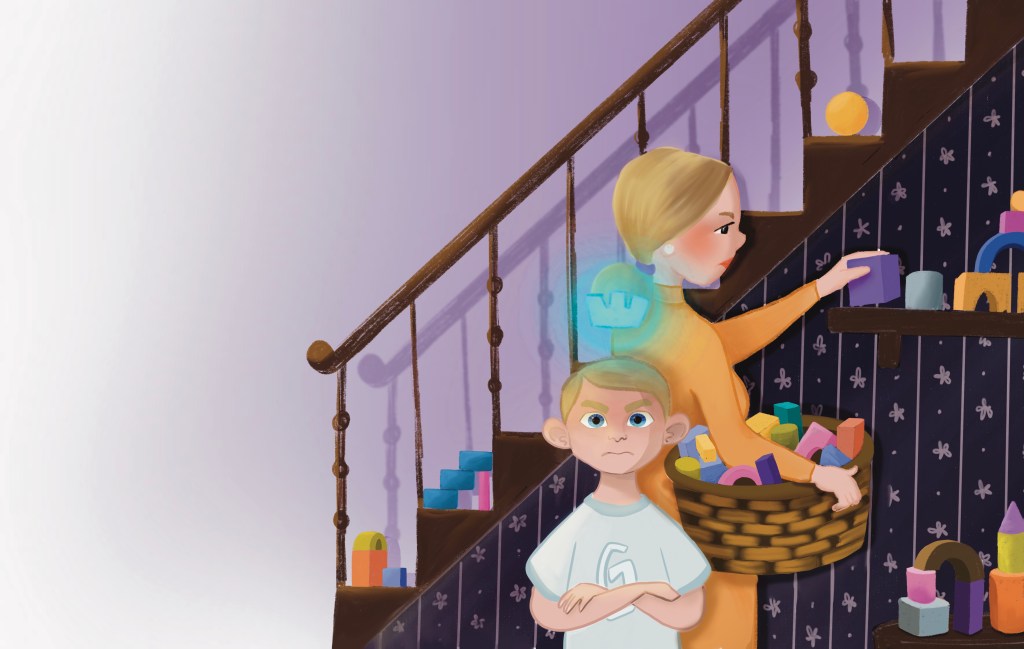
Gili had filled the entire house with blocks—on the stairs, in front of the bookshelves, even inside the sinks. He completely ignored his mother’s constant reminders: “This isn’t where they belong!” Every morning, the first thing his mother would do was start picking up blocks scattered all around the house. But by bedtime, the house would be overflowing with blocks once again.
But that day… that day, when Gili wasn’t home, his mother did the unthinkable. She threw away all the blocks—and along with them, all of Gili’s dreams.
What did Gili do when he found out? He cried and cried, then threw all the cushions on the floor and stomped on them furiously. Seeing this endless mourning, his mother immediately regretted getting rid of his blocks while he was away. She even offered to buy him new ones. But Gili didn’t want new blocks, he wanted his blocks. He had scribbled little writings and drawings on their edges in a script no one else could understand.
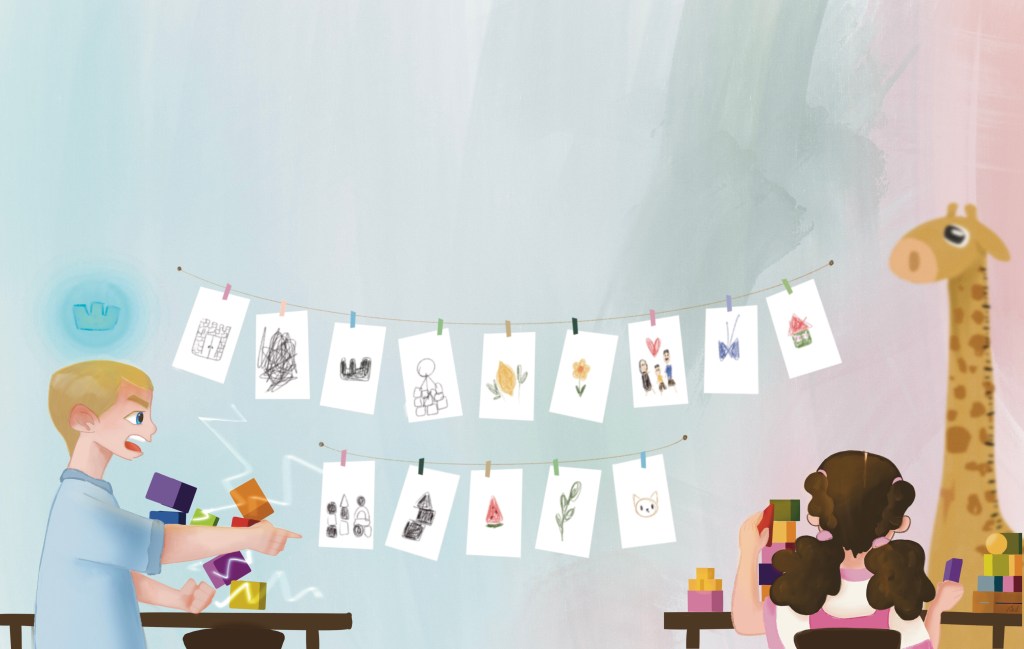
First of all, Gili wasn’t a child who was very compatible with his peers. Whenever a joint game was to be played, Gili always wanted his way. If someone came up with a new idea, he’d immediately interrupt with a completely different one. He would insist on everything, and if he didn’t get what he wanted, he would do whatever it took to spoil the game. His first wish, his second wish, his third wish, his fifth, his tenth… His wishes were endless.
For a long time after losing his favorite toys, Gili couldn’t bear the sight of blocks. He wouldn’t touch them, play with them, or dream about them anymore.
When he was old enough, his mother enrolled him in the school where she worked as the principal. At this school, all the children brought blocks from home. But since Gili had none, he didn’t bring any and played other games instead. Over time, this caused a division among the children in the class—those who played with blocks, and Gili, who did not.

One day, the teacher couldn’t stand this division anymore and told the children to include Gili in their games. While they weren’t too eager to play with “Troublemaker Gili,” they felt sorry for him and invited him to join. Each child handed him one of their blocks. Gili was thrilled by this act of kindness and spent the entire day playing happily with his classmates, treating them with unusual generosity. But the happy days didn’t last. The next day, Gili hid all the blocks he had received in a place no one could find, then pretended they were lost and asked for more. Having grown used to getting whatever he wanted from his mother, he treated his friends the same way.
“I want blocks! The teacher says you have to give them to me!” he would demand, pressuring the other children persistently. The children, fed up with his behavior, eventually refused:
“No, we won’t share our blocks with you anymore!”
And what did Gili do in response?
Of course, he didn’t stop. Anytime he found an unattended block, he would add it to his stash and guard them fiercely. Worse, he began accusing others of not watching over their blocks carefully enough.
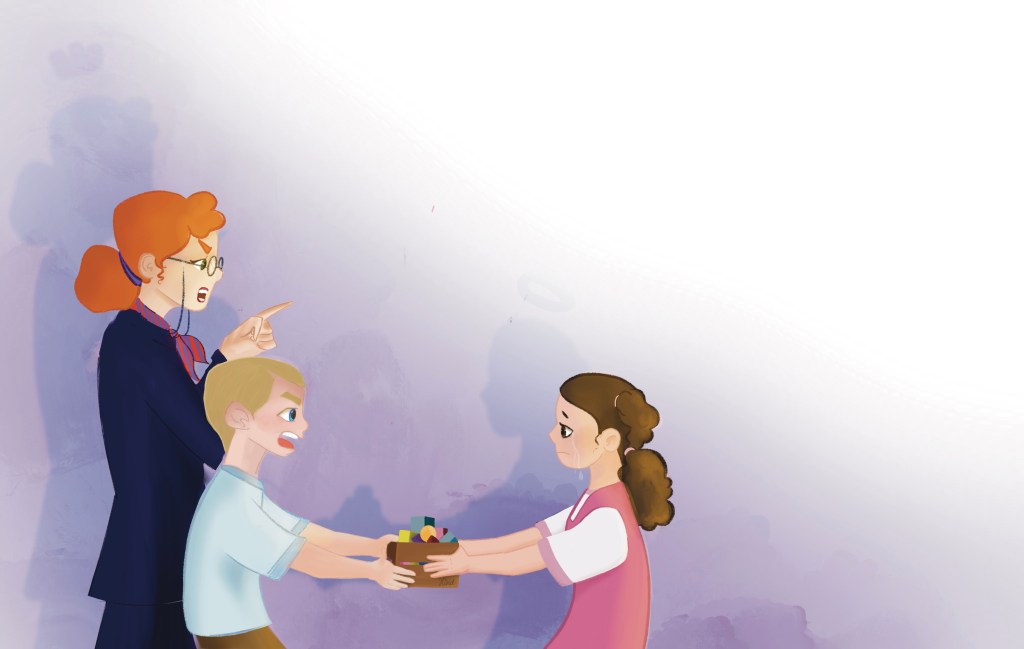
One day, Gili tried to take some blocks from Hind, a classmate. Seeing him claim her blocks as his own, Hind became furious and called for the teacher. By the time the teacher arrived, chaos had erupted.
“Those are my blocks! You can’t take them!” Hind shouted at the top of her lungs.
Finally, the teacher arrived, yelling, “Quiet down!”
“Look! He snatched my blocks!” she cried in frustration, pointing at Gili with wide, angry eyes.
But what happened next shocked Hind. Instead of holding Gili accountable, the teacher said, “Hind, you know Gili does this all the time. Why didn’t you keep a closer eye on your blocks?” Hind couldn’t believe her ears. Was the teacher really not going to make Gili give her blocks back? Was she going to let him get away with it?
Gili, emboldened by the teacher’s response, smirked and said, “See? You should have been more careful. If you leave things lying around, anyone can take them!”
Hind tried to explain herself repeatedly—to the teacher, to her classmates, even to Gili—but no one listened.
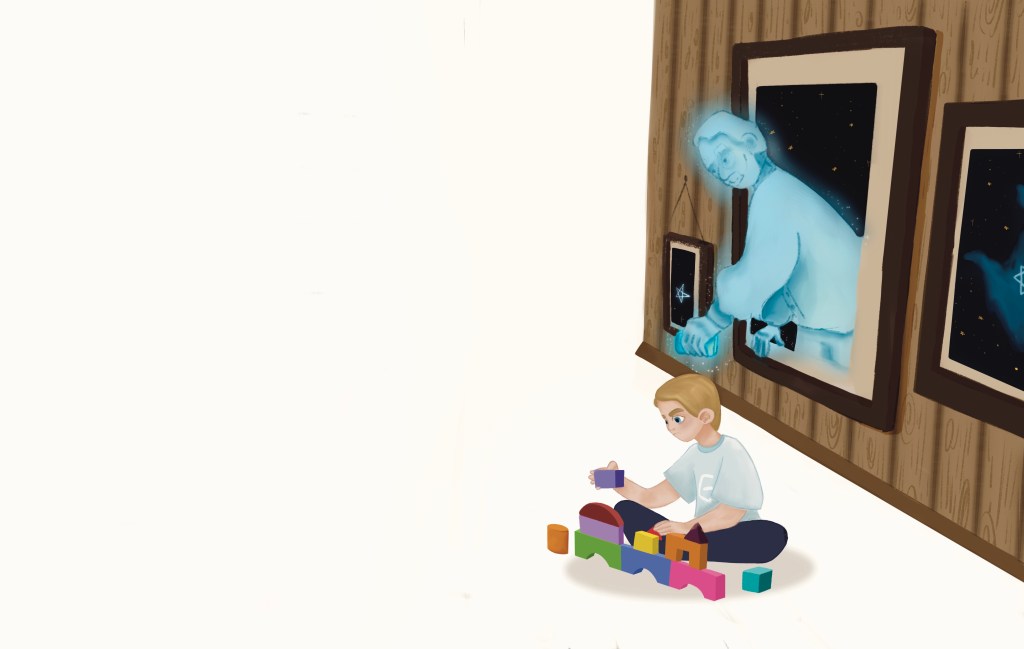
Gili’s way at school continued without any interruptions, and the thought of what more he could do filled him with excitement. After all, as long as he collected his friends’ blocks, he could build whatever game he wanted.
“I’m working on a huge project,” he often said, “and I need more blocks than anyone else.”
And why wouldn’t he believe that? His grandfather had once told him, “All the blocks belong to you.” Gili proudly repeated this to everyone, as if it were the ultimate truth.
His teacher, however, didn’t say a word to Gili. She never stopped him and often let him have his way. In fact, she even supported him at times. Everyone knew why: Gili’s mom was the school principal. As a “solution (!)”, the teacher suggested that the other children could just play hide-and-seek instead.

Over time, the number of blocks each child had dwindled significantly. At first, everyone had enough blocks to build bridges, houses, or trucks. But now, even when they pooled together all the blocks they had managed to keep safe from Gili, all they could make was a simple, flat wall. Nearly every block in the classroom was under Gili’s control.
And yet, Gili wasn’t even playing with them. His entire focus was on hoarding blocks.
As the days passed, Gili began to feel lonely. Playing alone had started to bother him. Just like he always did, he decided to “fix” this problem. He turned to his mother for help.
“Mom, the kids here are too dumb to be my friends,” he complained. “That’s why I can’t be friends with them. But if you move my sister to my class, I won’t be lonely anymore.”
With his sister in the same class, Gili was sure his plans would go smoothly. And that’s exactly what happened. Together, the two of them made life even harder for the Others.
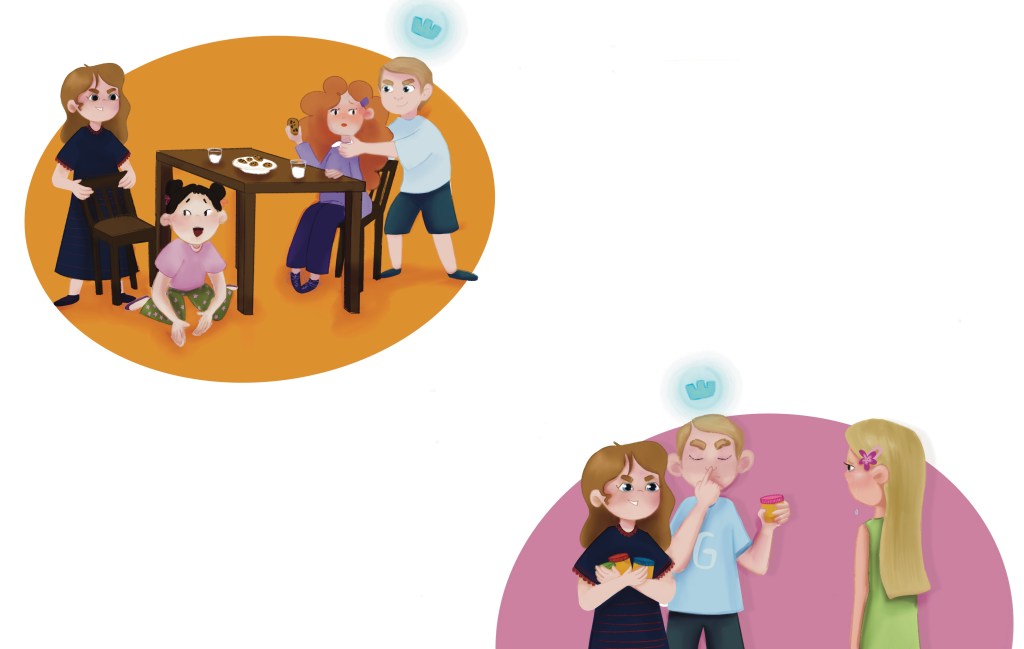
They started taking more than just blocks. In the cafeteria, they would push others aside to get to the front of the line. They’d grab the best chairs, wash their hands first, and sometimes even steal cookies off others’ plates.
Gili made up rules on the spot to justify his actions. “Whoever touches their nose first gets the playdough!” he’d announce—having already touched his own nose. “Only kids wearing white shirts get to decide what we do today!” Unsurprisingly, Gili was the only one wearing white that day.
With these unfair and divisive rules, Gili tightened his grip on the classroom. The playground, the most cherished space for all the children, was no exception. Eventually, Gili and his sister declared, “Nobody can come in here unless I say so.” He yelled at his classmates and teased them as they waited at the entrance. The rest of the school had no choice but to obey Gili’s rules.
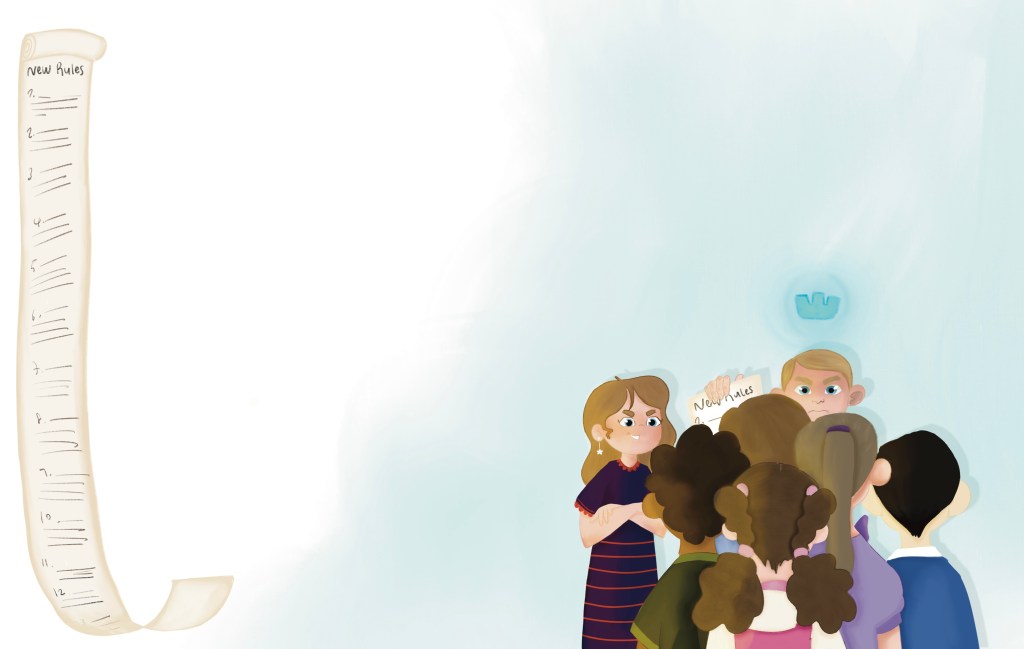
Gili didn’t stop there. He and his sister started raiding other classrooms, taking blocks that didn’t belong to them. Their privileged behavior grew more outrageous with each passing day. When the Others went to the principal and told her what Gili was doing, she didn’t believe them. She dismissed their concerns, saying they were exaggerating. If they were fighting over the playground, she suggested they could just play in the park outside during recess instead.
As far as anyone could see, there was no one to hold Gili or his mother accountable. But the Others had only one demand: Gili had to apologize and return all the blocks. One day, the Others, fed up with everything that had happened, decided to take a stand. When Gili, his sister, and their principal mother arrived at school that morning, they were met with an unexpected sight. The Others had taken all the school keys and were holding their ground! They refused to let Gili, his sister, or even the principal into the building.
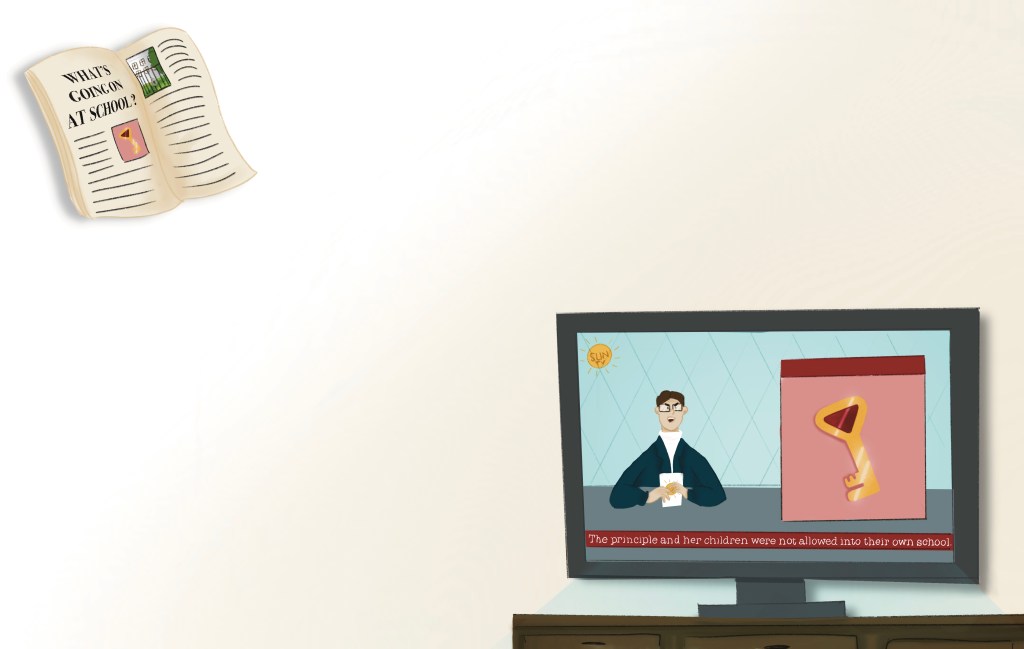
News of this spread quickly across the country. Other school principals appeared on TV, condemning the incident, soon to be known as the Key Event.
Headline 1: “Where Education Has Gone: Principal and Her Children Locked Out of Their Own School!”
Headline 2: “Troublemakers Halt Education.”
Headline 3: “Principal Victimized by Outrageous Behavior!”
The Others were stunned by these headlines. What about the blocks? Why wasn’t anyone mentioning them? Why wasn’t the media talking about how it all began? Instead, they painted Gili and the principal as the victims. Every newspaper, TV channel, and social media account told the same story. No one seemed interested in asking why the doors were locked or why the Others couldn’t use the playground. The narrative was simple: the Others were troublemakers.
Gili wasn’t (!)
The principal wasn’t (!)
Soon, different versions of the story began spreading online, and through viral videos, leading to more division. New groups started forming: Gili’s Supporters (later called the ‘Gilites’), the Others, and the so-called Peacemakers. Gilites insisted his rules should stand and even argued that the blocks rightfully belonged to him. For them, kids like Gili deserved to control the schools.

The teachers argued that peace and harmony could only be achieved through silence, insisting that education required a calm environment, free of resistance, to continue. They worked hard to ensure that the situation was not “exaggerated.” In doing so, they became the first members of the Peacemakers group. The issue of who controlled the blocks didn’t matter to them—they claimed to be neutral but their silence told a different story, it was easy to stay silent when they had never been the ones suffering.
And what about the Others? After being under pressure for so long, it took time for the Others to organize. Through their first attempts to fight for their rights, they quickly realized they couldn’t rely on the media to amplify their voices.
The chaos at school had spiraled out of control, spilling beyond its boundaries. Even children from nearby schools were choosing sides—joining either Gilites or the Others. Although Gilites were much fewer in number than the Others, the division grew stronger.
Nearly every child found themselves drawn into one group or the other.
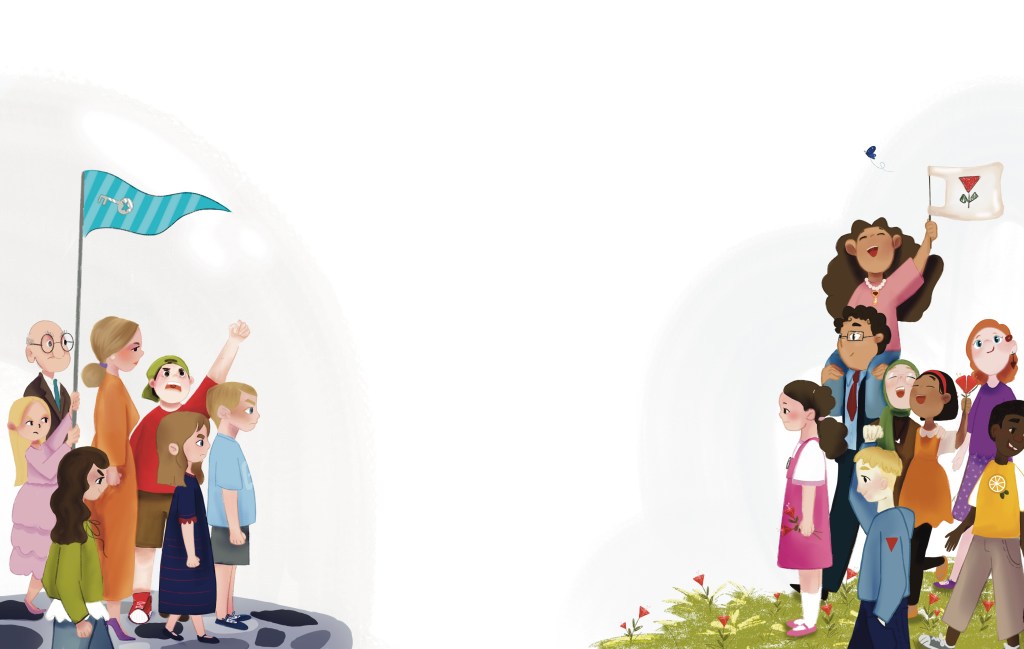
When did it all begin? Where had it escalated? Everyone had their own version of events. Gilites believed the trouble began the day Gili and his mother were locked out of the school. The Others, however, pointed to the day Gili started taking blocks without permission, saying that the incident with the keys was merely a reaction—a stand against long-standing unfairness.
No matter what the Others explained, the flood of false reports didn’t stop. Principals from various schools used their power to paint the Others as wrongdoers, even when they were right. Meanwhile, the Others kept fighting to make their voices heard.
As the situation escalated, protests began. The Others wore T-shirts printed with messages and pictures to explain their struggle and show everyone in the country where they stood. They carried signs that read:
“Those blocks are ours!”
“We can’t imagine a childhood without blocks!”
“Play is every child’s right!”
Through these visuals, the media had no choice but to broadcast their message, forcing the world to hear their side of the story.
On the other side, the Gilites were holding keys in their hands and shouting, “Give the keys back to the principal!” According to them, the keys were theirs, and so were the doors. The classrooms, the schools, everything was theirs. The Others were just interrupting their plans.
The principal immediately imposed bans on the others. Blocks were banned, wearing block t-shirts was banned, protesting was banned. Those who broke the bans wouldn’t be allowed to play games either!
Still, nothing could scare the Others. They were very brave, smart, and hopeful.
How did they do it?
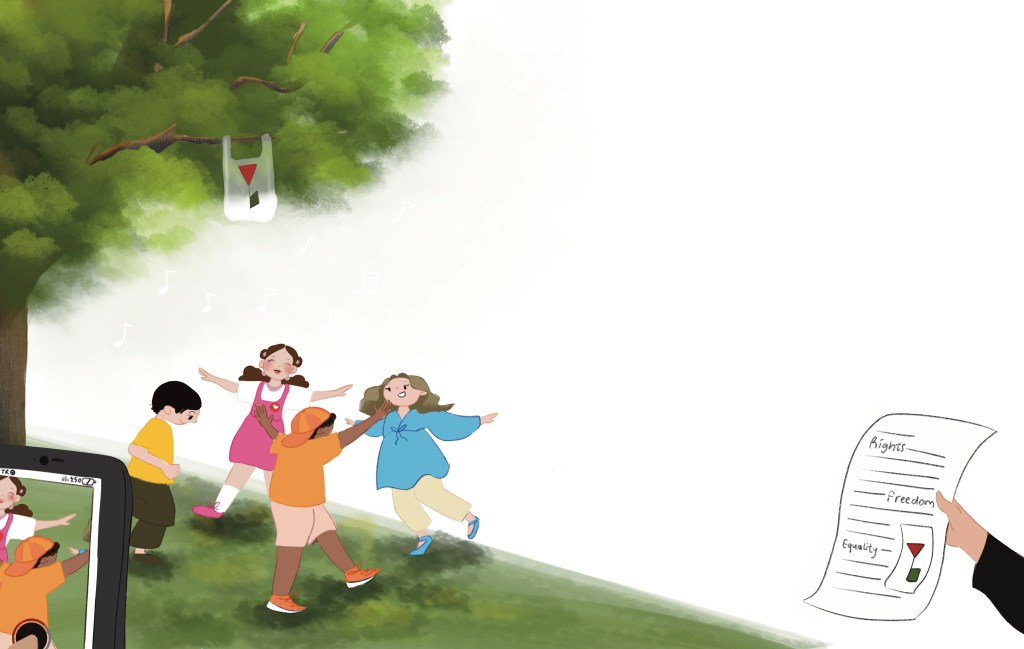
At first, they showed their resistance through various activities, such as dances, poems and songs. One of their dances was inspired by people from South Africa, Sudan, and Palestine. In the Dinka Jump from Sudan, they held their heads high, proud and tall. From the Zulu Warrior dance of South Africa, they moved boldly, ready for action. And like in the Palestinian Dabke, their feet tapped in harmony with the ground, showing they were strong together. They stomped, they jumped, they twirled—they called it the Dance of Resistance!
When someone tried to silence them, they stomped their feet to show they wouldn’t be quiet, that they were resisting together.
“We have the right to play the games we want, wherever and however we want!” they said.
Some of the Others had an important job: Gathering kids from other schools and helping protect the few blocks their friends still had. Others worked to spread the word. They handed out colorful leaflets with big, bold words about rights, freedom, and sticking up for each other. Patiently, they explained the whole story to the Gilites and Peacemakers, over and over, hoping they would finally understand.
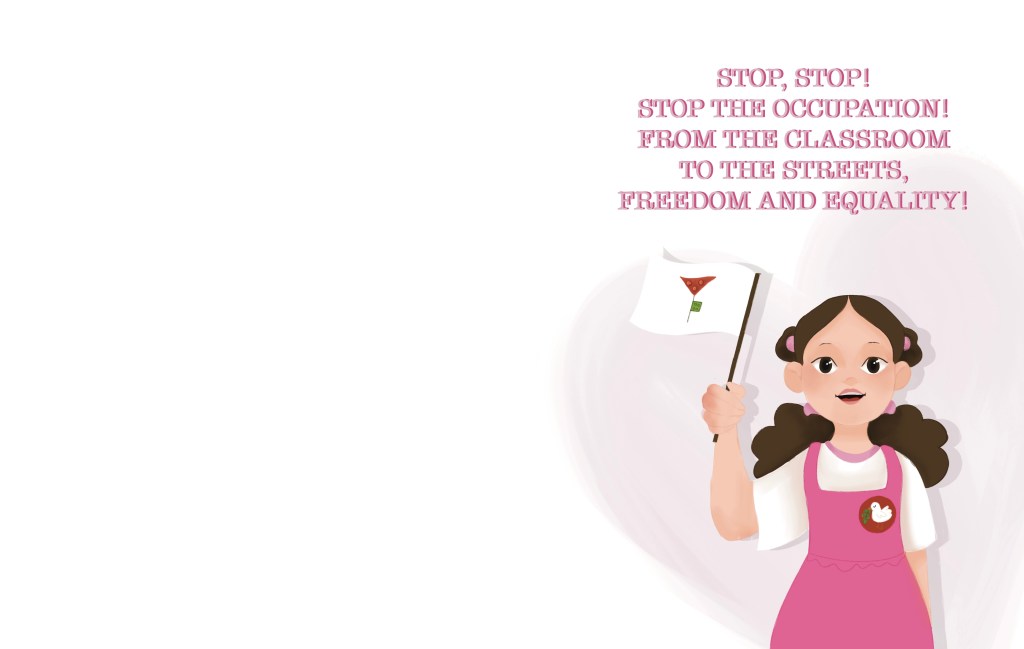
They responded to the Gilites with a boycott. The Others stopped going to shops and bookstores. They also stopped wearing the school uniform. They couldn’t let anyone legitimize the injustice Gili had done to them. If there was a right, they had to defend it to the end. On the other hand, it couldn’t be said that they were alone in this struggle. When the Supporters decided to join the boycotts and support the Others to the fullest, the course of events changed.
For days, weeks, and months, they spoke fearlessly about what had happened while they were outside the school. They didn’t stay silent or neutral. The first thing they learned throughout this process was that silence meant accepting the injustices. It was like applauding the oppression. They decided to do something and responded. They didn’t stay quiet, didn’t give up, and didn’t ignore what was happening.
Their hard work and kindness were like planting seeds in dry soil. Slowly, those seeds started to grow. A few Gilites and Peacemakers began to listen. They started to wonder: What if the Others were right? Some of them looked deeper, and what they found made them feel a little sad—and a little guilty.
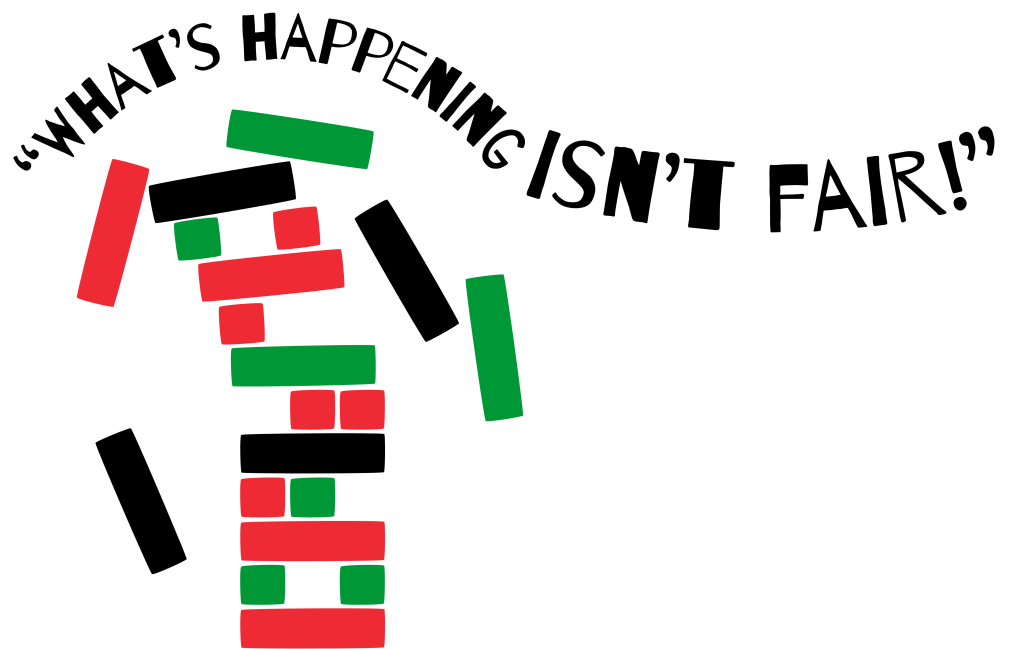
These kids, who had once stood on the other side, began to change. They said, “What’s happening isn’t fair!” They stepped away from their groups and joined the Others. They danced together, played games, and learned about sharing and being fair.
Soon, more and more kids joined. They weren’t just helping the Others—they were standing up for what was right. Everyone started calling them the Supporters because they were always there to back up the Others. Every day, their group grew bigger and stronger, like a river rushing toward justice. Together, the Others and the Supporters became a team, not just for kids’ rights but for fairness for everyone, everywhere.
“We are thousands, we are millions! We are all from the Others!”
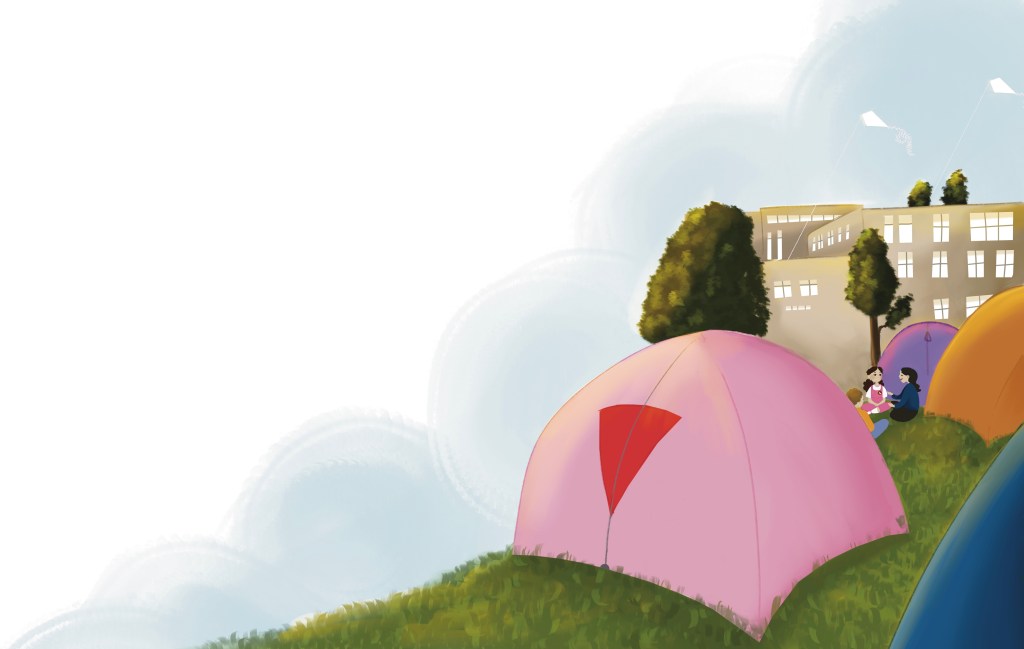
The Others grew closer to the Supporters each day, discovering new ways to fight for their freedom together. After protests, banners, boycotts, and wearing block-patterned shirts, they came up with a bold new idea: They would set up a camp in the schoolyard and go on strike. Instead of going home, they pitched tents and stayed there, night after night. They vowed not to leave until the school principal and teachers stopped siding with the Gilites.
If justice wouldn’t be given to them, the Others were determined to take it themselves—and they would! This is how they learned to resist, even at such a young age.

1, 2, 3, 4 – Occupation no more!
5, 6, 7, 8 – The system is a hypocrite!
“Disclose! Divest! We will not stop, we will not rest!”
So, what happened next, you ask?
In schools across the country, the Others and the Supporters shouted the same slogans again and again:
“Stop! Stop the occupation! End the grab!”
They organized protests so powerful, and boycotts so effective, that they shattered the authority of the principal and teachers who had supported the Gilites. The Gilites’ worst fears came true. At first, they had bullied and oppressed the Others at school and beyond. But thanks to the determination of the Supporters, the tables turned. The Gilites grew fewer in number. They lost everything that had once made them seem strong.
The only thing left for them was fear—the fear of losing the “rights” they had stolen. As more people woke up to the truth, even some principals and teachers joined the Supporters, apologizing one by one. Keeping silent in the face of injustice became something to be ashamed of.
“No Justice! No peace!”
And with this shift, new rules were introduced at schools:
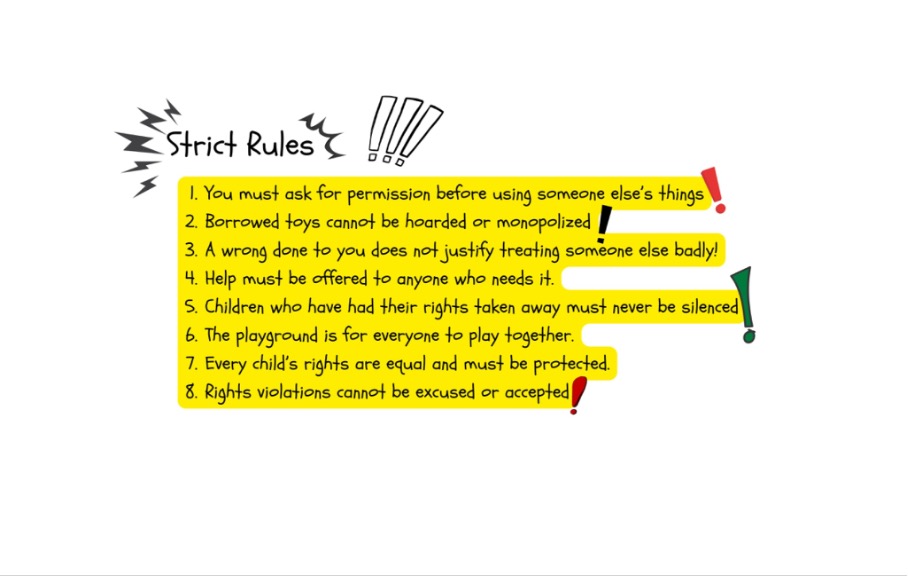
These rules were the fruit of their resistance, their refusal to stay silent, and their relentless fight for their rights. What did they think silence was, after all? Was it peace to violate other people’s rights and expect them to be silent, or was it injustice?
And oh, how beautiful justice looked when it finally arrived! It was in the beaming smiles of thousands of children, the joyful streets, the songs of freedom, the dances, the decorations, and the celebration of fairness.
Peace didn’t come all at once. It came slowly, stitch by stitch, through patience and perseverance. Peace came hand in hand with justice.
What a struggle it was! What an honorable victory! Together, they had moved such a big rock!
And as for Gili? What became of him? Well, like every story where someone takes what isn’t theirs, his ending was humbling.
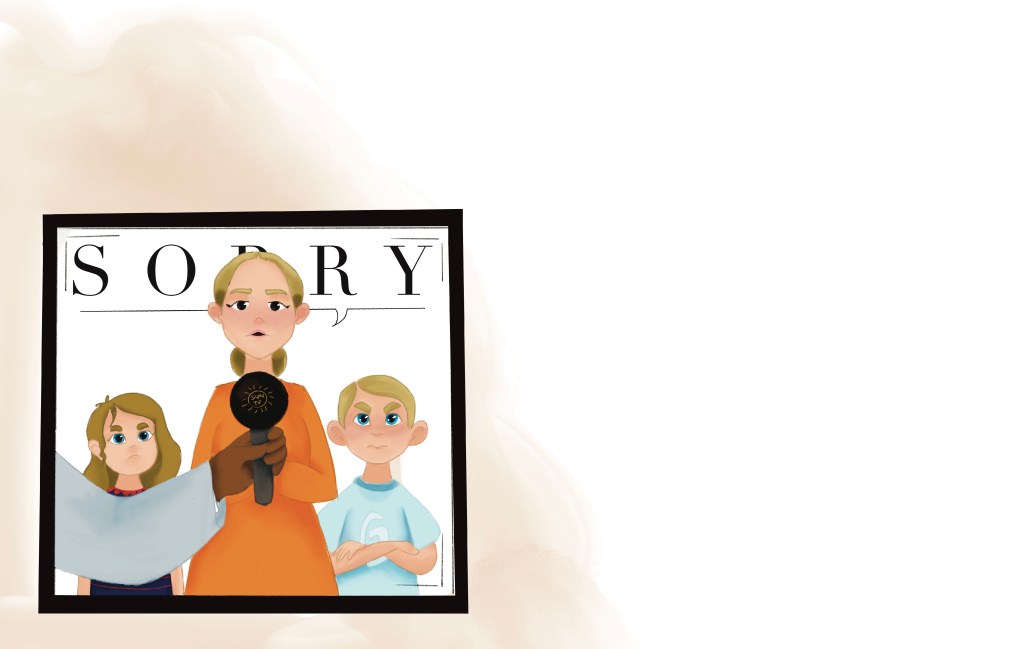
Gili had no choice but to return all the blocks he had taken. How could he stand against such a great resistance? Even his mother who was the principal apologized—to Gili, to the other children—and helped Gili give the blocks back.
Once the blocks were returned, the Others handed the school keys back to the principal.
And, of course, the headlines said it all:
Headline 1: Principal Apologizes for Block Incident!
Headline 2: The Real Mischief Makers Were Us!
Headline 3: The Keys Are Yours, and So Are the Blocks!
With the school at peace, everyone celebrated. They painted the school in colorful block-like shapes, and from a distance, it now looked like one giant block sculpture. Every class began with a Resistance Dance, and all the children played with the blocks together, enjoying them to the fullest.

Now, they could use their blocks to build cities—no longer confined to constructing just a plain, single wall.
Now, tell me, who solved the WORLD’S BIGGEST problem?
The world’s biggest and most difficult problem was solved by the perseverance of Others! The resistance freed their Supporters, the Peacemakers, the media, themselves, and even the Gilites! It liberated Gili and his mother too! Yes, even them! The blocks were finally where they belonged. Everything was so simple.
And no matter what problem they faced, all the children and adults knew one thing for sure: When rights were stolen, resistance was the best play!
 "Must Live to Tell"